
DTC anime womenswear brand on Shopify. From chaotic boosts to a synchronized paid + organic system - best week hit ROAS 8.51.
DTC womenswear brand · United States - name hidden at the client’s request.
The client is a DTC womenswear e-commerce brand for the anime community, targeting women 18–34. The store runs on Shopify with a drop-based inventory model - limited stock, regular new product launches, and weekly restocks.
The brand has a strong organic presence through Reels, posts and stories. Paid advertising needed to amplify organic demand, not replace it - syncing ad launches with content and product drops was the key challenge.
With limited in-stock inventory and frequent drops, you can’t build “evergreen campaigns.” Advertising had to constantly shift focus to whatever was currently available, synchronized with product launches and organic content.
The ad account was built entirely around chaotic boosts - no structure, no audiences, no strategy.
As a sustainable profitability baseline - and a foundation for scaling.
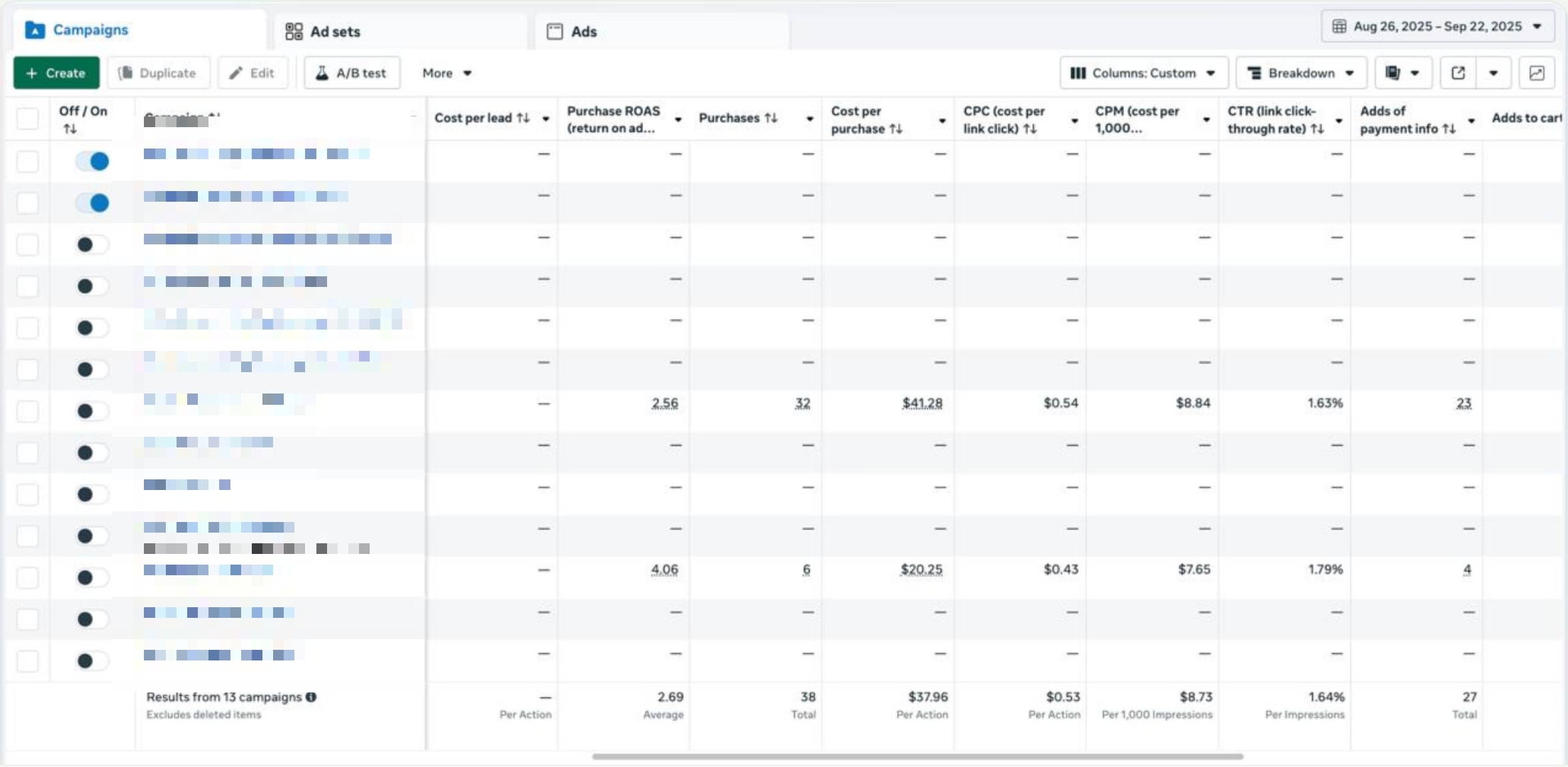
Meta Ads Manager - Aug 26 – Sep 22, 2025. ROAS 2.69, 38 purchases, $37.96 cost per purchase. Boost-only approach.
Demand and product were fine. The advertising itself was the bottleneck: the account was running on chaotic boosts rather than managed campaigns.
Boost-only approach. Only boosted posts were used - no proper campaign structure existed.
No audiences. Targeting was either absent or random, with no structured testing.
No ad copy or creative variety. No dedicated ad texts, no different creative formats for different placements.
No product / drop synchronization. Ads ran independently of inventory availability and product launches.
Advertising wasn’t driving sales - it was just amplifying whatever happened to be published.
The logic was sequential: first create a controllable advertising system, then synchronize it with the brand’s organic content and product lifecycle.
Replaced chaotic boosts with full campaigns: dedicated Instagram creatives, ad copy, targeted audiences and correct age settings. Structured audiences around the core segment - women 18–34 - and tested precise targeting. Campaigns started generating sales, but volume wasn’t enough yet.
Tested the product catalog at the client’s request. Sales came in but were unstable, and the catalog didn’t provide meaningful scale. Kept it as a supplementary tool rather than the main driver.
Prepared a full creative brief for the client: video content, banners, ad copy and formats for different placements. Started running boosts with proper setup - clear audiences, configured placements, synchronized with publications. This is when noticeable sales growth began.
The biggest turning point. I got the client’s shipment and launch schedule, learned when posts were going out, and timed ad launches to match new drops. I added audience warm-up through stories before product releases, amplified organic posts with paid spend, and launched campaigns at the right moment.
A one-month comparison against the prior period.
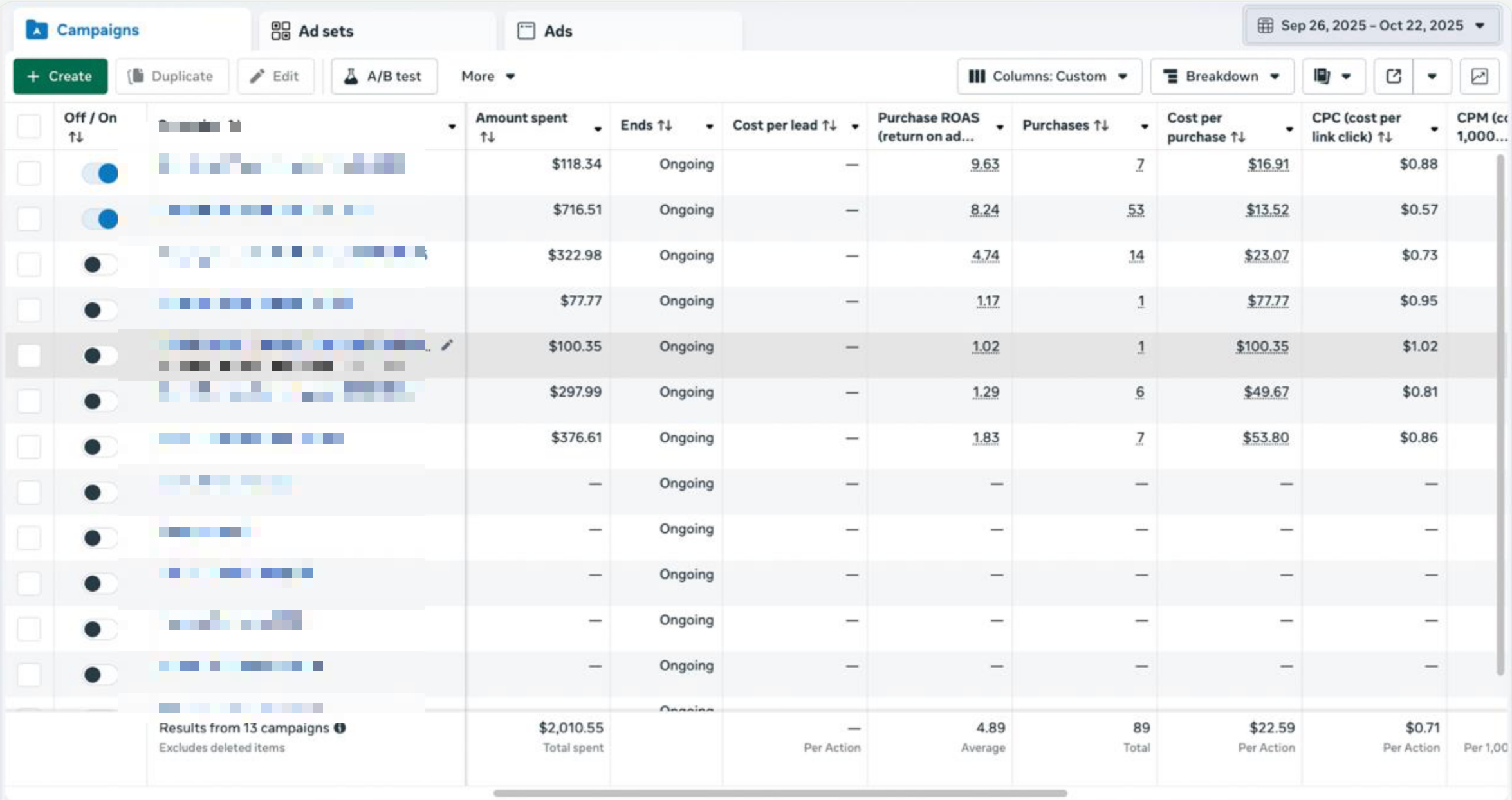
Meta Ads Manager - Sep 26 – Oct 22, 2025. ROAS 4.89, 89 purchases, $9,838 revenue.
This case wasn’t about magic ad settings - it was about building a sales system. When I started, the ad account was just chaotic boosts of random posts: no structure, no audiences, no strategy. Ads weren’t driving sales - they were just amplifying whatever happened to be published.
I replaced that with a proper campaign structure: dedicated creatives, ad copy, targeted audiences and correct settings. But the real breakthrough came when I fully synchronized paid advertising with the brand’s organic content and product lifecycle - timing ad launches to new drops, warming up audiences through stories before releases, and amplifying organic posts. Paid became a system that multiplied organic demand.
It wasn’t magic settings - it was a system. Chaotic boosts were replaced with a real campaign structure: dedicated creatives, ad copy, targeted audiences and correct settings.
Paid + organic in sync was the turning point. Timing ad launches to product drops and amplifying organic posts turned advertising into something that multiplied organic demand instead of running in isolation.
Built for a drop-based model. With limited stock and frequent launches there are no evergreen campaigns - the system constantly shifted focus to what was in stock and synced with each release.
Profitable and scalable. ROAS went 2.69 → 4.89 (best week 8.51), revenue 2.5×, cost per purchase −40% - a predictable growth model, not random sales.
“I turned random boosts into a sales system synced with the brand’s content and product drops - and the economics followed.”
Tell me about your business and goals. I’ll show you honestly whether paid ads can get you there - and what it would take.
Discuss your project →